40" Rows:
Broadcast:
Sandy:
Loam:
Clay:
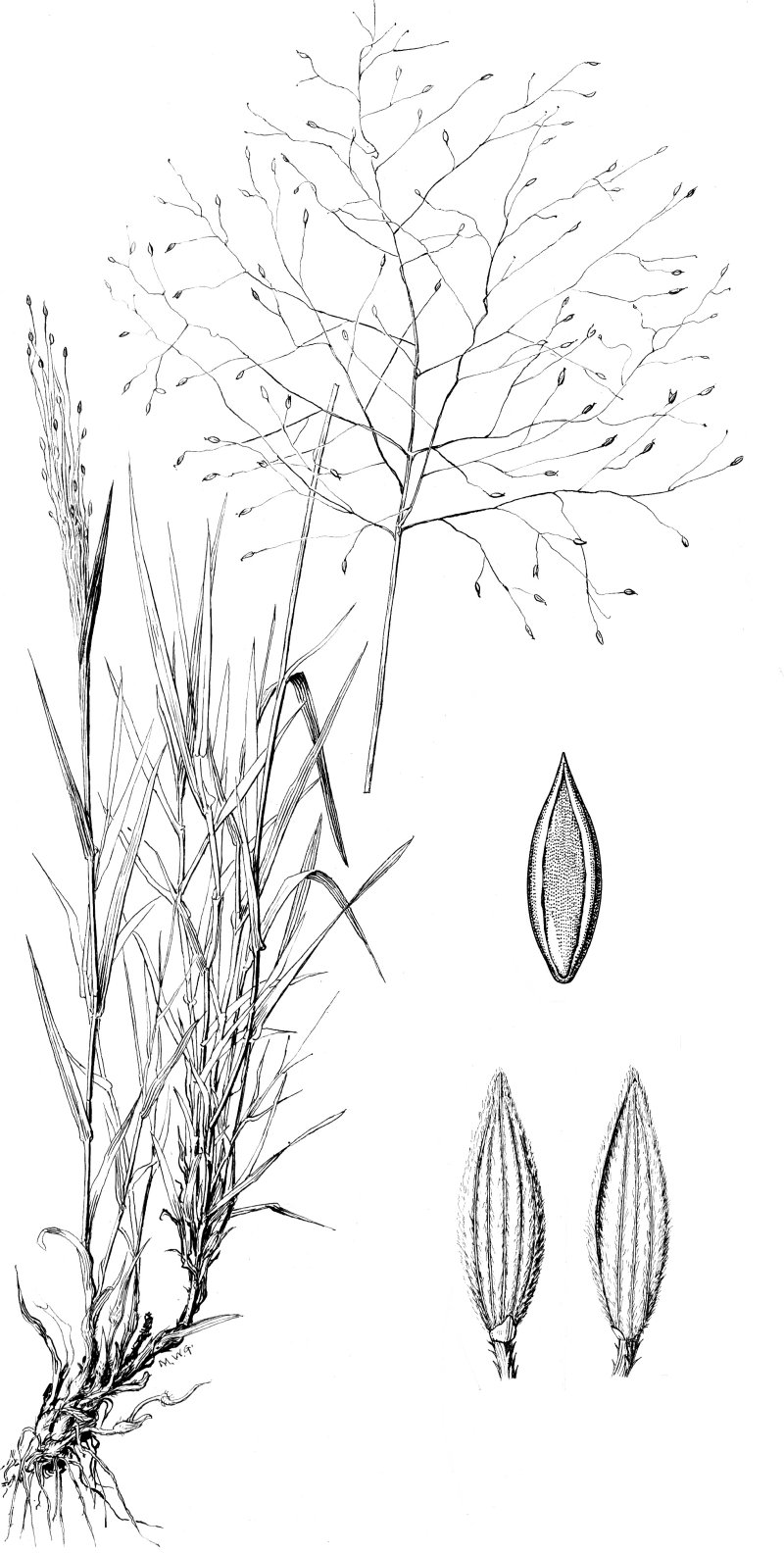
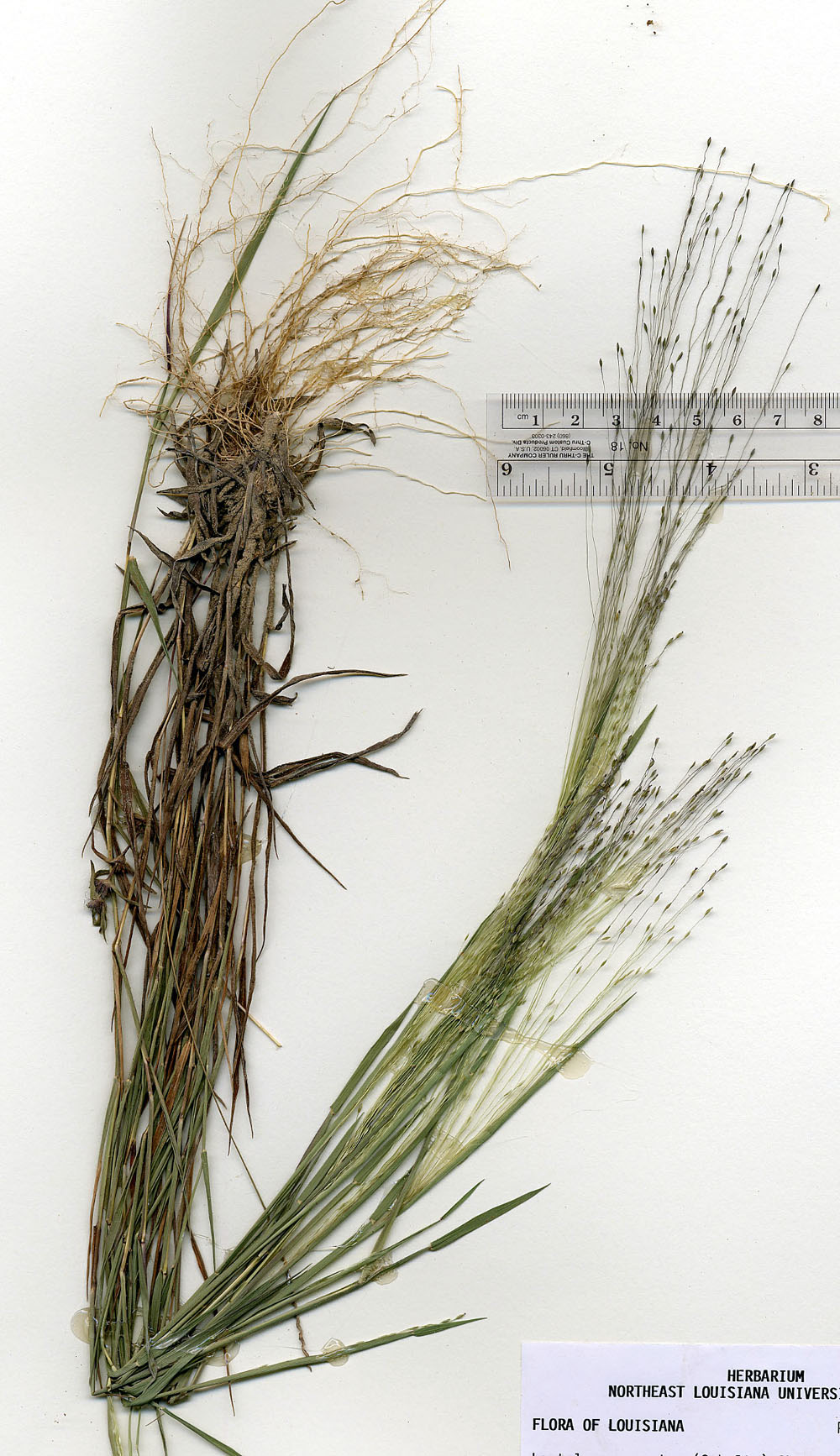
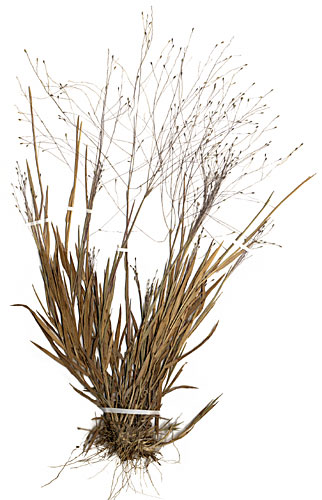
Habit: 		Tufted perennial, with very diffuse panicles, which fall off and become tumbleweeds.
Culms: 		Decumbent, much branched below, 30-70 cm. tall, pale green, leafy, very brittle,
		felty pubescent at the base.
Blades: 	Flat, rather rigid, usually glabrous, 5-8 cm. long, 2-6 mm. wide,
		margins scabrous, white and often wavy.
Sheaths: 	Shorter than the internodes, the upper usually glabrous, lower sheaths
		thinly to felty pubescent.
Ligule: 	Membranous, 1 mm. long.
Inflorescence: 	Panicle one third to one half the entire height of the plant,
		purplish, short-exserted, very diffuse, as broad as long or broader; the
		capillary scabrous subflexuous branches at first ascending, soon widely
		spreading, naked below, bearing single spikelets at the extremities of
		slender pedicels, pilose in the axils.
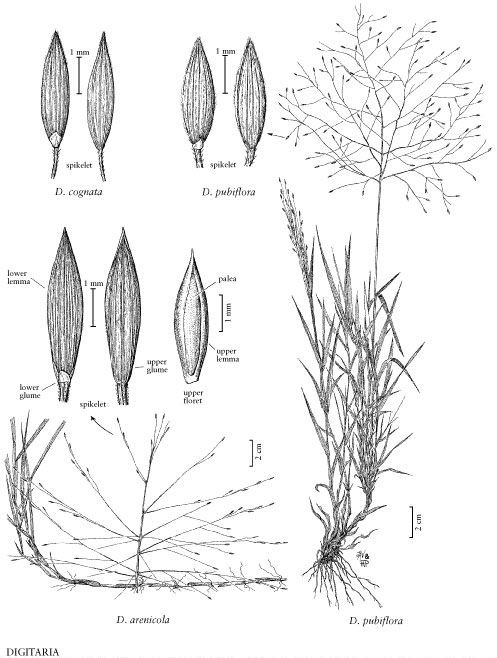
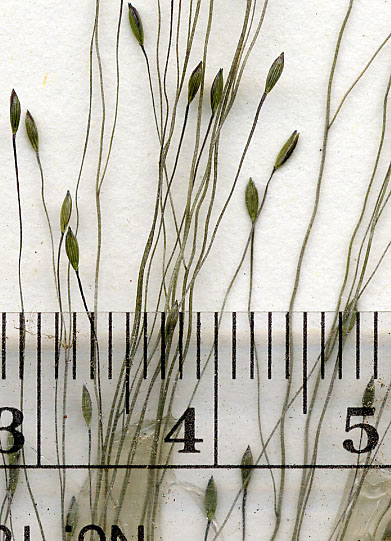
Spikelets: 	Narrowly elliptic, 2.5-3 mm. long, acuminate; 1-flowered, solitary,
		on a 3-angled scabrous pedicel, 1-4 cm. long.
Glumes: 	First glume minute or obsolete, second glume 3-nerved, nearly as long
		as the 5-7 nerved sterile lemma, both with a stripe of appressed silky
		pubescence between the nerves and on the margins, or the hairs becoming
		loose and spreading especially on the margins, very variable in the same panicle.
Lemmas: 	Sterile lemma empty or enclosing a minute nerveless rudimentary palea;
		fertile lemma cartilaginous, elliptic, acute, brown, the delicate flat
		hyaline margin enclosing a palea of like texture.
Fruit: 		Grain, free within the lemma and palea, about 2.5 mm. long.
Habitat: 	Dry soil and sandhills, sand prairies.  July-September.
Special Notes: